
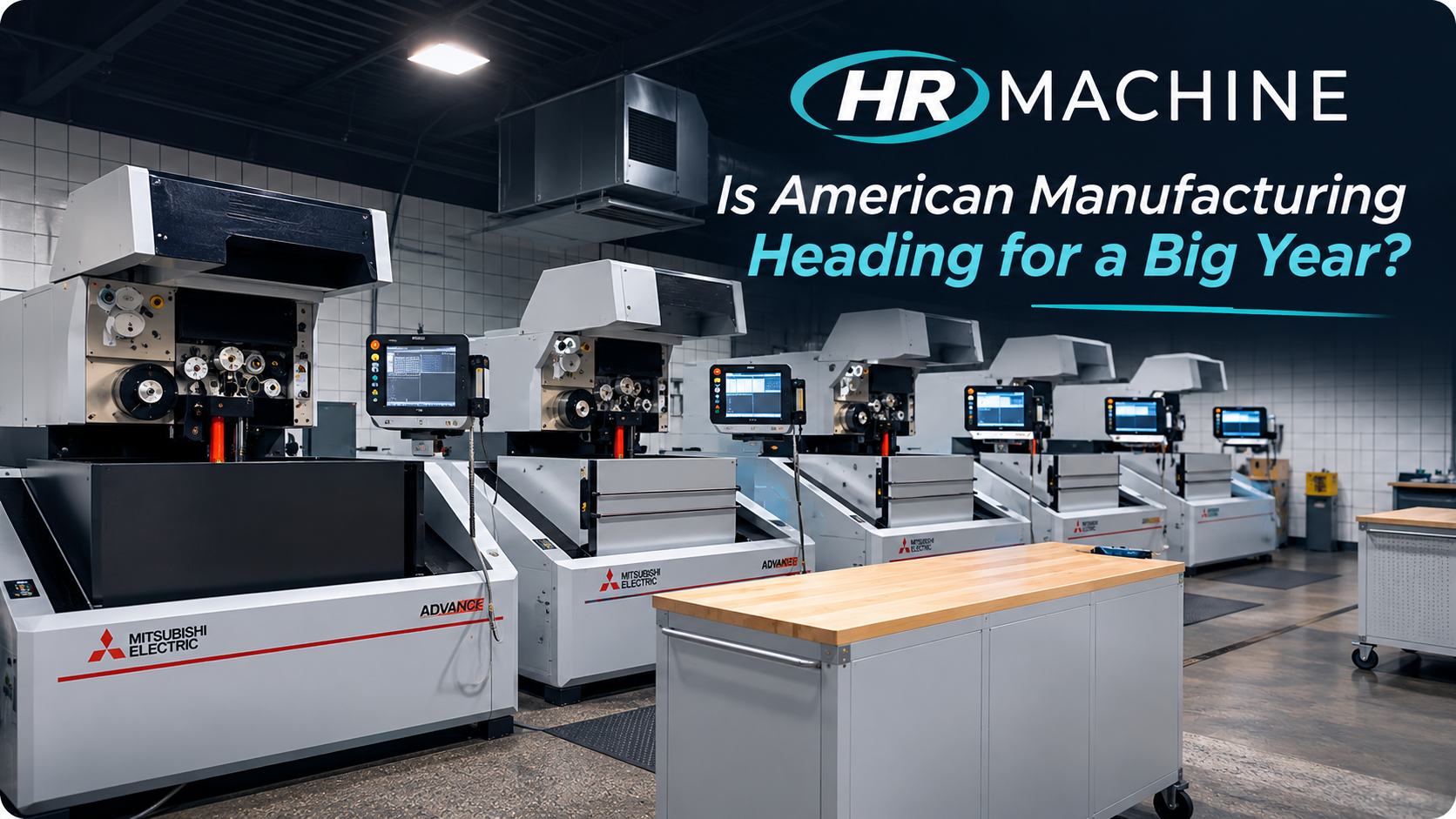
American manufacturing is making some serious moves. As 2026 comes to a close, investments in metalworking machinery are reaching historic levels, and the industry is showing signs of continued momentum heading into 2027.
According to the Association for Manufacturing Technology (AMT), U.S. manufacturing technology orders exceeded $1 billion in September 2026 alone, representing a 101.7% increase compared to September 2025. Through the first nine months of 2026, total orders reached $5.76 billion.
That's a substantial amount of money being put back into the manufacturing industry. But what's driving it, and what does it mean for the businesses that rely on American machine shops?
The Industry Is Putting Its Money Where Its Mouth Is
The International Manufacturing Technology Show (IMTS) in Chicago played a significant role in September's record-breaking numbers. From advanced CNC equipment and robotics to improved tooling and manufacturing software, the industry's direction was clear: manufacturers are looking to produce more, work smarter, and take on increasingly complex projects.
The HR Machine team attended IMTS 2026 and saw firsthand how manufacturing technology continues to evolve.
Here in Dayton, Ohio, where manufacturing and machining have been woven into the local economy for generations, staying competitive means continuously evaluating how we operate, what equipment we invest in, and what additional capabilities we can bring to our customers.
Standing still isn't much of a business strategy in this industry.
Where Is the Demand Coming From?
Aerospace, defense, energy, semiconductor manufacturing, and artificial intelligence infrastructure are among the sectors contributing to increased manufacturing investment.
Behind many of these technological advancements are physical components that need to be manufactured. Housings, fixtures, tooling, brackets, specialized assemblies, and complex metal components all require some level of manufacturing expertise.
As products become more sophisticated, the demands placed on precision CNC machining become more challenging. Tighter tolerances, difficult materials, complex geometries, and increasingly aggressive production schedules leave little room for error.
A part either meets spec or it doesn't. There isn't much middle ground.
More Equipment Doesn't Automatically Mean Better Manufacturing
Buying new machinery is one thing. Knowing how to get the most out of it is another.
Experienced machinists understand how material behaves, how tooling wears, how heat affects dimensional accuracy, and how a seemingly minor adjustment can make a significant difference across an entire production run.
At HR Machine, our approach to production machining combines modern equipment with practical machining knowledge, disciplined processes, and repeatability.
The goal isn't simply to make more parts. It's to make more good parts, consistently and efficiently.
What Should Manufacturers Be Preparing for in 2027?
While the industry outlook is encouraging, increased demand can also bring challenges. Material costs, skilled labor availability, supplier capacity, and lead times will remain important considerations.
For businesses sourcing machined components, now is a good time to evaluate manufacturing partnerships, communicate anticipated production needs, and get upcoming projects in front of suppliers early.
Whether you're developing a new product through prototyping and custom machining or preparing for larger production volumes, early collaboration can help identify manufacturing challenges before they become expensive problems.
Looking Ahead
American manufacturing has never been an industry that rewards complacency. The shops that invest in their people, equipment, processes, and customer relationships are better positioned to handle whatever comes next.
Here at HR Machine in Dayton, Ohio, we're heading into 2027 with that same mentality. Keep improving, take on the tough jobs, find creative solutions, and deliver quality work.
The industry may be changing, but the fundamentals of good machining haven't.
